
Developers still pay the BCF and miss out on savings
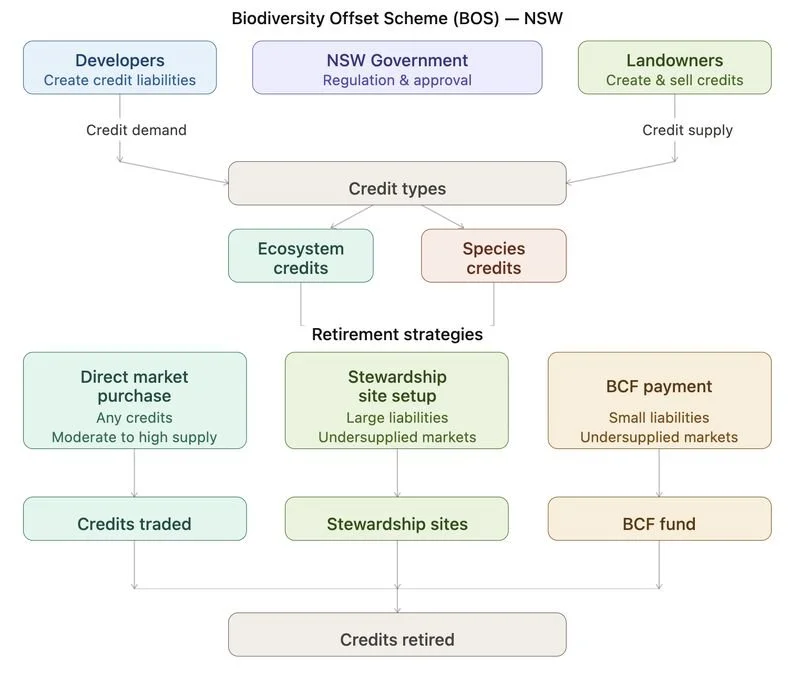
Market strategies for developers in the NSW BOS market
For a single credit type over the past 12 months, more than $250,000 was paid into the Biodiversity Conservation Fund. The same credits were sitting waiting on the open market for around 20% less.
Understand the market
This credit is White Box Yellow Box Blakely's Red Gum Grassy Woodland and Derived Native Grassland in the Inland Slopes region. It is one of the most actively traded markets in the scheme and there are more than 15,000 issued credits available right now.
Whilst many of these credits are held by major project proponents and not available for sale, there are plenty of other holders that are likely to be willing sellers. We assess that in the immediate term, the market is oversupplied. Prices have been declining, but many buyers are still defaulting to more costly BCF payments.
Select the right strategy, not the easy one
Perhaps its because the BCF feels safe, easy, and administratively straightforward? But that comfort has a cost, and in this case it's a significant one.
Good data and a bit of strategy can go a long way. Knowing which credit types have direct market options and what the median transfer price looks like is key for an informed decision.
Market-sourced credits also fund active, established stewardship projects. BCF payments don't carry the same direct link and investment in conservation may not occur for years.
So the market option is better for your budget and better for the environment.
At Speargrass, this is what we do. We help clients understand the market, find the right credits, and retire them using the right strategy to achieve the best available prices and transaction costs.
