
Offset Market Insights - Q1 2026 Market Update
Newsletter - June 2026
Welcome to the first edition of the Speargrass offset market newsletter.
Markets need good information to function well. Speargrass is on a mission to help environmental offset markets work better for the environment and the economy.
This newsletter provides you with our latest updates on market trends, key industry and regulatory developments, important insights to consider, and firsthand observations from across the market.
Q1 2026 - Market Update
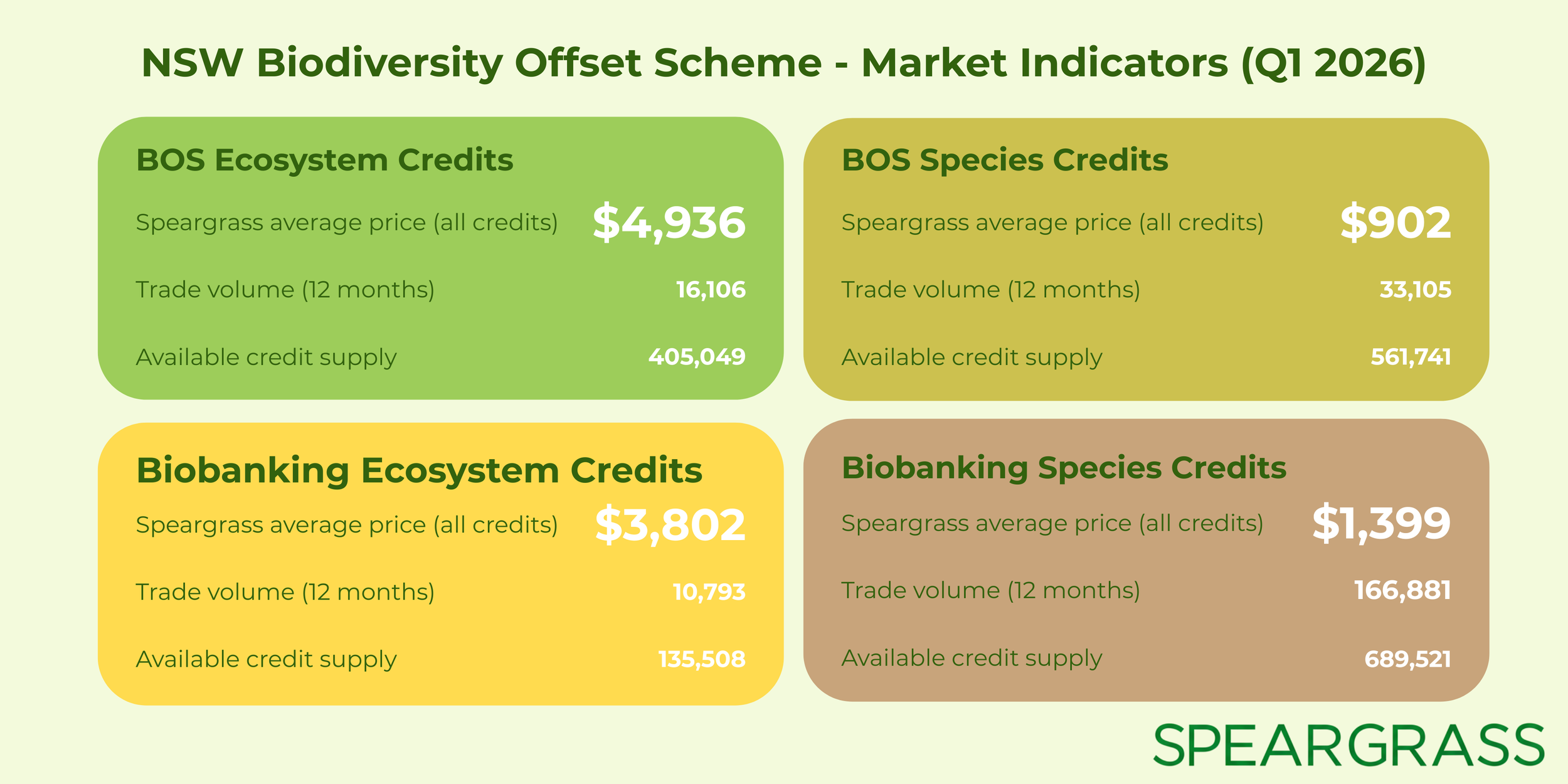
The first quarter of 2026 was a calmer one for the NSW biodiversity credit market. After an active 2025, the pace of trading eased while underlying prices held broadly steady across most segments.

The ATO released two new rulings on the taxation of NSW biodiversity credits.
These clarify the taxation situation for the BOS market, but they did not remove upfront capital gains tax liabilities.
Do you need credit prices or credit valuation?
In a market like the NSW Biodiversity Offset Scheme, the gap between pricing and valuation advice is usually much wider than most realise.
Pricing advice addresses what a credit is likely to trade for right now. Valuation addresses what an asset is worth at a defined point in time.
Using a price when valuation is needed can seriously impact tax and business decisions. Pricing a credit poorly risks paying too much or selling for too little.
Many developers are still paying too much for offsets
There are three different ways to deal with offset liabilities in NSW - buy credits, create your own or pay the Biodiversity Conservation Fund.
Even in more active markets with good supply, too many developers may be paying into the fund without considering all their options.
We reviewed one of the most active markets in the BOS scheme to show how much this costs.
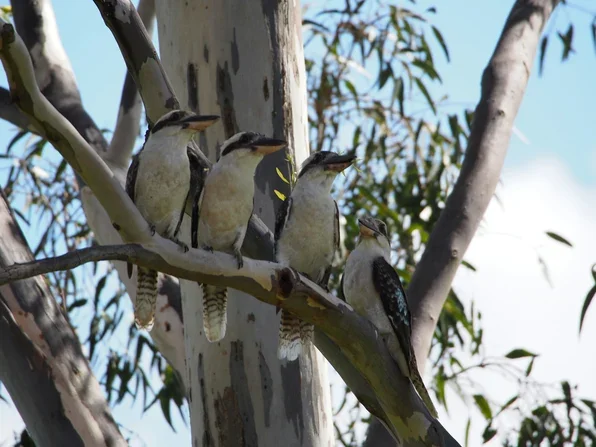
Understanding NSW Offset Markets
Our summary of the basics for the NSW Biodiversity Offset Credit markets that you need to know if you are new to the space.
Government Policy Updates
Significant policy reforms are progressing, meaning more fundamental change is ahead for offset markets. Click on the links to read our synthesis of what is underway.
In NSW IPART has released its draft BOS Market report for 2025. The verdict is one of real but uneven progress: the market is broadening and the government has made genuine changes, yet the structural problems IPART named in 2022-23 are largely still there.
Nationally, the introduction of a new standard for environmental offsets is progressing as part of the EPBC reforms. Better integration of this new approach with State regimes should be a significant step forward.
Queensland has embarked on a significant reform of its environmental offsets policy that will have big implications for the future of offsets in that State.
What we've been working on:
Conducted valuations for two large stewardship agreements, ensuring the proponents could understand the worth and potential tax implications of large new credit holdings.
Helping a client deal with a complex offset liability involving existing and new stewardship sites, buying credits from the market and paying into the BCF for residuals.
Assisted clients to deal with complex offset and approval compliancematters, spanning state-level and national frameworks, complex approvals and multiple stakeholders.
Provided pricing and trading insights to assist clients with feasibility and offset strategies.
Supported a client with initial BSA feasibility on potential property purchases.
Built a database that prices every credit in the NSW BOS market and tracks trading history. Over 3400 regional ecosystem credit markets and 249 species markets now have information consolidated and ready to better inform the market.
Began building tools to help the market work better, stay tuned...
